Newsletter Subscribe
Enter your email address below and subscribe to our newsletter

 ByJohn A
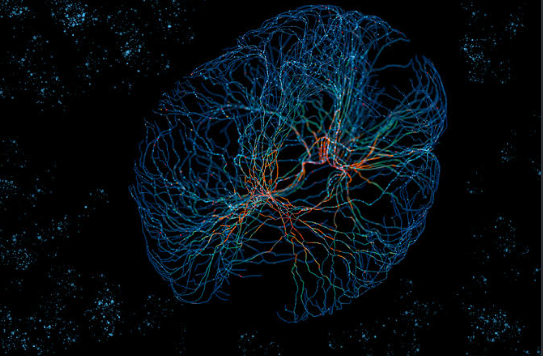
Neural networks form the core of contemporary artificial intelligence, translating data into structured representations through layered computation. They optimize complex mappings by adjusting weights via gradient-based learning, enabling perception, prediction, and decision-making across domains. The architecture—from simple perceptrons to deep models—shapes performance, efficiency, and interpretability. As capabilities grow, governance, ethics, and sustainability become integral. The balance among data quality, computational cost, and reliability will determine how these networks redefine practical outcomes, inviting further examination of their evolving role.
Neural networks power modern AI by approximating complex functions through layered processing of data. They enable pattern recognition, decision making, and predictive modeling across diverse domains. This approach emphasizes modular computation, scalable training, and iterative refinement.
However, interpretability challenges persist, complicating accountability and governance. Additionally, energy efficiency considerations influence model selection, hardware design, and deployment strategies, driving research toward leaner architectures and sustainable inference.
See also: coatnews
Core concepts trace the transformation from simple units to multi-layered architectures. Neural topology organizes connectivity, enabling hierarchical representations that support learning. Gradient stability governs weight updates, shaping convergence and reliability. Data bias influences generalization, demanding corrective mechanisms. Model efficiency emerges from streamlined architectures and optimization practices, balancing capacity with computation. Together, these facets underpin robust, scalable deep learning systems.
Applications that move the needle in industry encompass a diverse set of deployments where neural networks deliver measurable value. Enterprises leverage predictive analytics, automated quality control, and optimized logistics to reduce waste and downtime. Careful attention to data privacy and robust model deployment practices ensures compliance, traceability, and scalable performance. Outcomes include reproducible gains, rapid iteration, and resilient, data-driven decision making across sectors.
This analysis assesses regulatory frameworks, transparency, and accountability, while clarifying responsibilities for developers and institutions.
Core concerns remain ethics governance and data privacy, where robust safeguards, verifiable audits, and principled design are essential to balance innovation with public trust and individual rights.
Neural networks learn from limited data by leveraging priors and regularization; they generalize through small dataset expansion, data augmentation, and transfer learning, reducing overfitting while preserving meaningful representations, enabling robust performance despite constrained information within principled constraints.
AI, ML, and neural networks differ in scope and purpose: AI is the broad field, ML enables data-driven learning, and neural networks are a subset modeling complex patterns. About 85% of AI artifacts rely on such models, ML interpretability remains crucial.
Neural networks do not exhibit true understanding or machine consciousness. They simulate cognition within defined limits and operate under predetermined objectives. This raises questions about limits and ethics, guiding toward responsible use while preserving human freedom and oversight.
Approximately 92% of tested models fail under novel perturbations, highlighting safety gaps. The analysis centers on model evaluation and risk mitigation, emphasizing systematic stress tests, robust benchmarking, and transparent reporting to support responsible, freedom-respecting AI development.
Cost optimization and deployment scaling dominate practical considerations. Organizations evaluate hardware, cloud tariffs, and model efficiency, balancing latency and throughput. Stakeholders pursue scalable architectures, cost-aware training, and governance to sustain robust performance while enabling freedom to innovate.
Neural networks underpin contemporary AI, translating vast data into actionable insight through layered abstractions. As architectures scale, performance gains follow, with deep models now surpassing traditional methods in many tasks. A striking statistic highlights this trajectory: models with hundreds of billions of parameters have demonstrated state-of-the-art accuracy across diverse benchmarks, yet training costs and energy consumption grow disproportionately. This underscores the imperative for efficiency, governance, and ethical deployment alongside continued methodological innovation.